Introduction
Automating abandoned cart recovery is an effective way to boost your sales and recover incomplete orders. With Reportana, you can create automations that identify these cases and send personalized messages to encourage customers to complete their purchase. In this article, you’ll learn how to set up this automation in practice
How It Works
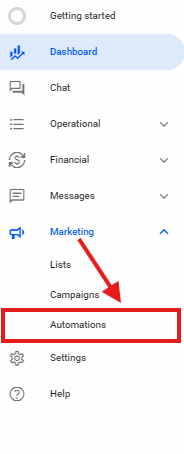
Log in to your Reportana account. Go to the side menu and click on Marketing → Automations. Or access: Marketing - Automations.
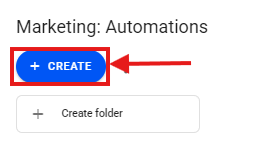
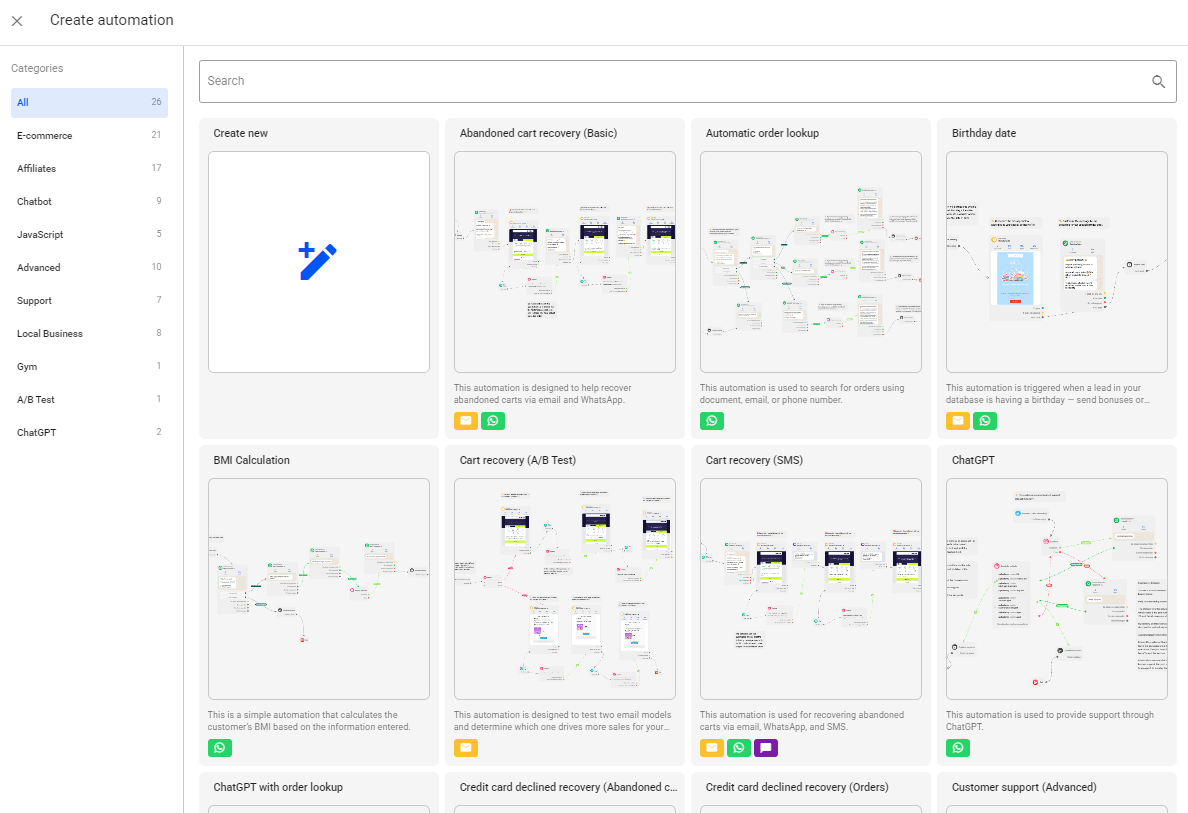
First click on +Create.
In this tab, you’ll find some automation templates created and validated by the Reportana team. They can be used as a base and freely edited to suit your needs.
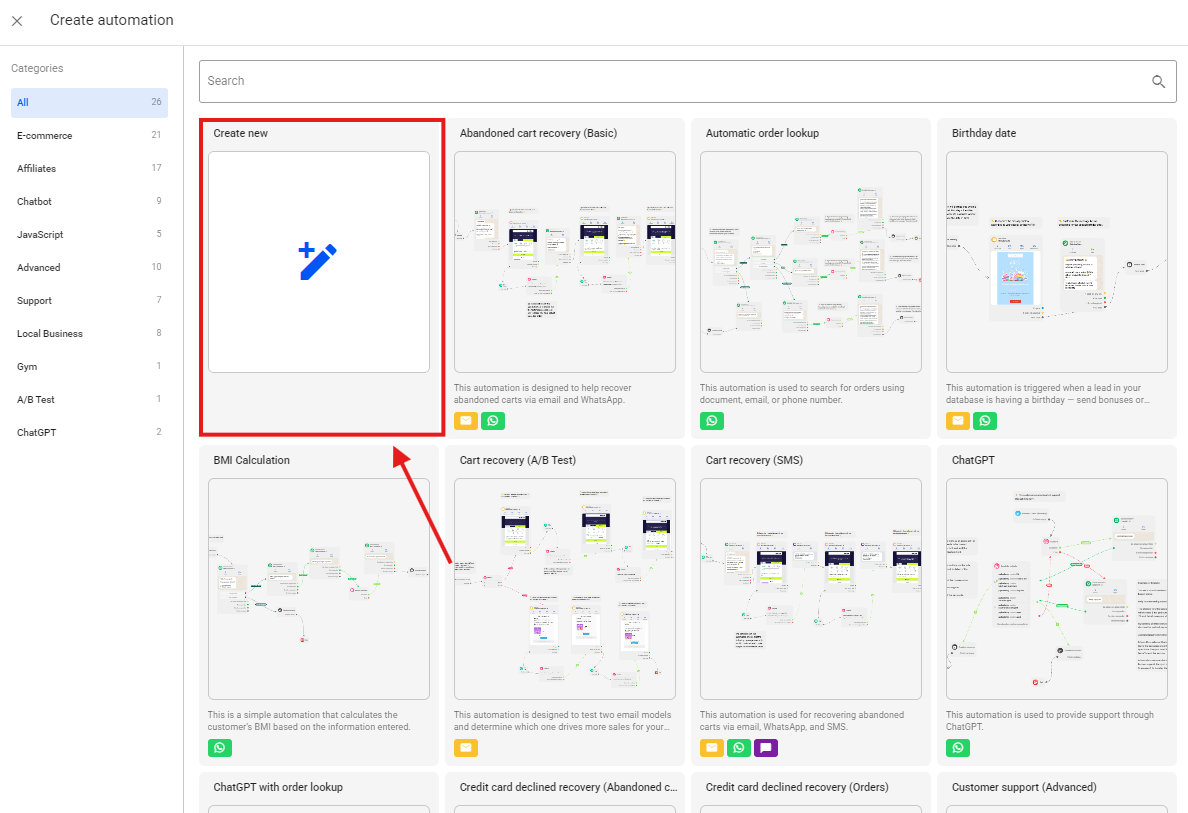
Select Create New.
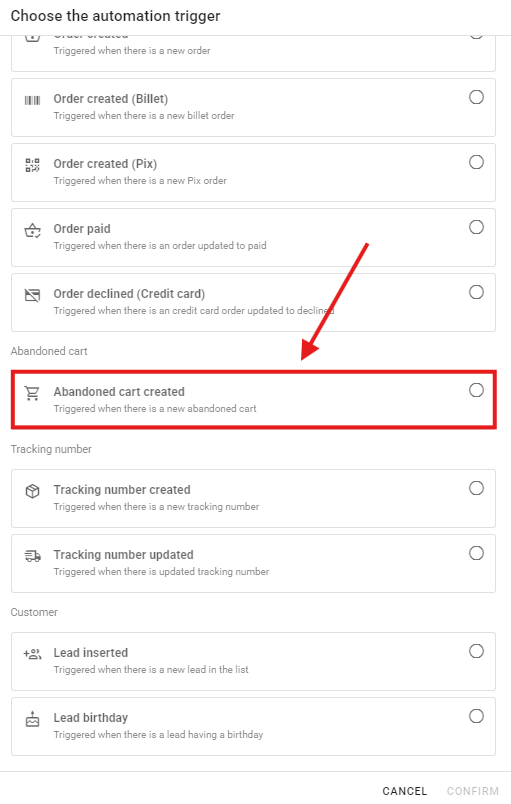
Select the Abandoned Cart Created trigger.
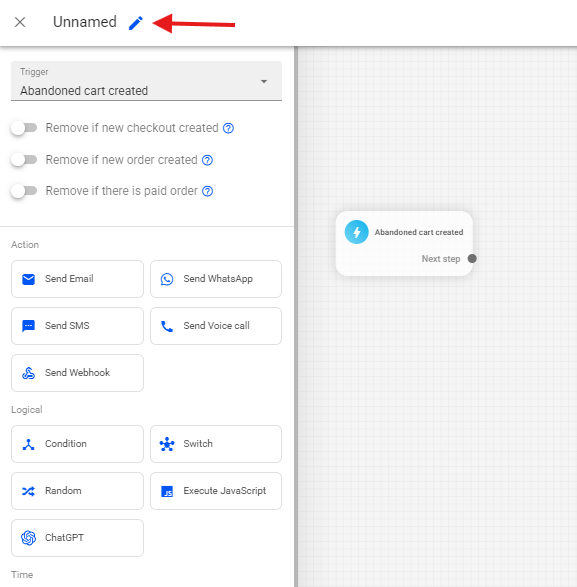
First, click the pencil icon and enter the name of your automation
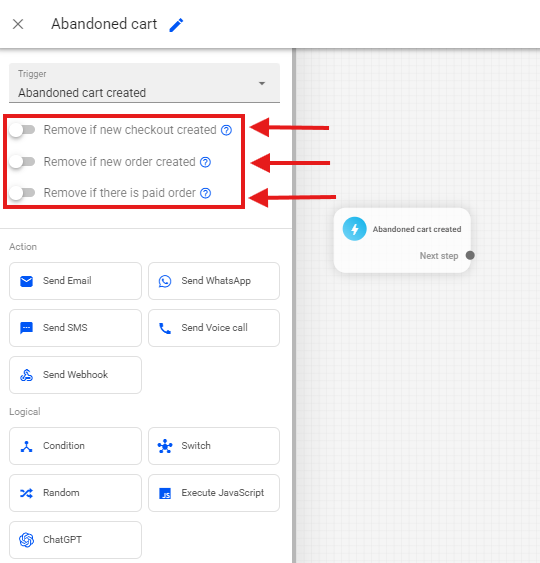
After entering the name of your automation, you’ll see the following buttons, which you can activate according to your strategy:
- Remove if new checkout created: Configure the automation to remove the lead if they create a new abandoned cart. Only the most recent abandoned cart will remain in the automation, avoiding duplicates.
- Remove if new order created: Configure the automation to remove the lead if they place a new order
- Remove if there is paid order: Configure the automation to remove the lead if they place a new order that has been paid.
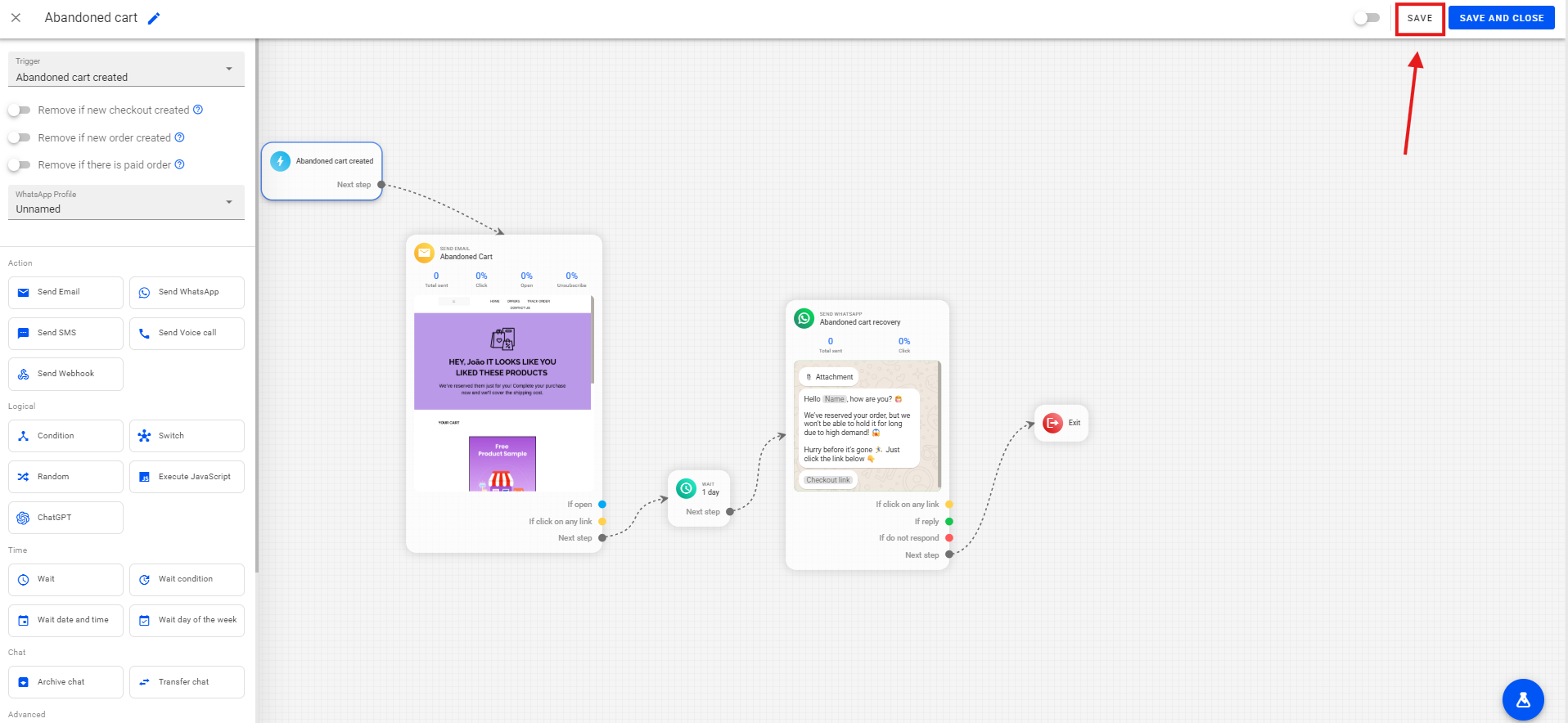
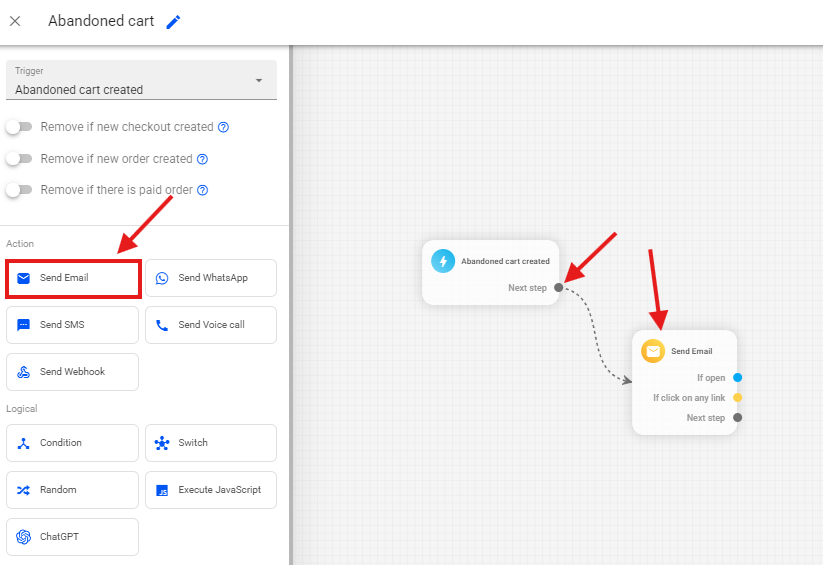
If you wish to send messages via email, go to the side menu, select the Send Email option, and link it to the Next Step sub-trigger of your main trigger.
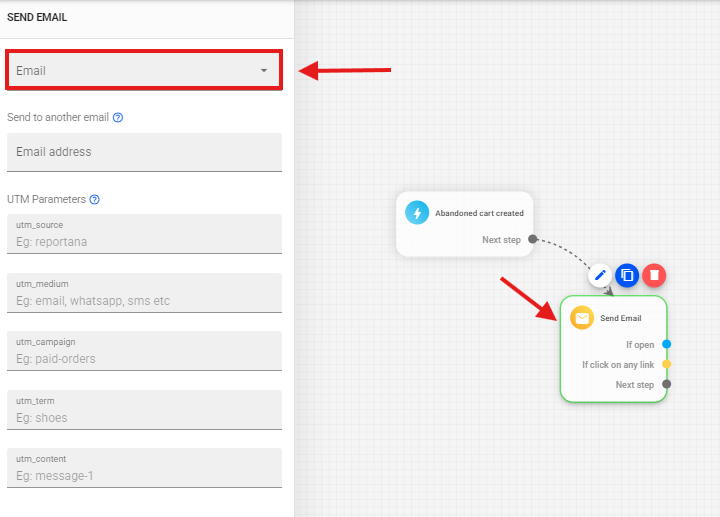
Select your Send Email block and click on the Email option.
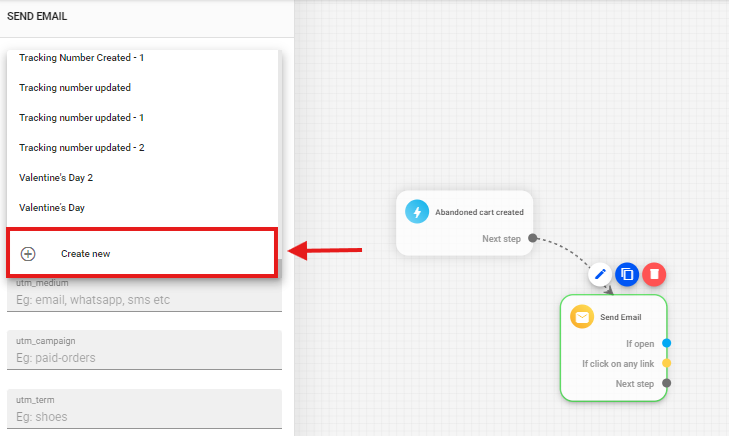
All previously created emails will be displayed, and you can reuse them if you wish. However, in this example, we’ll create a new message. To do so, select the Create New option.
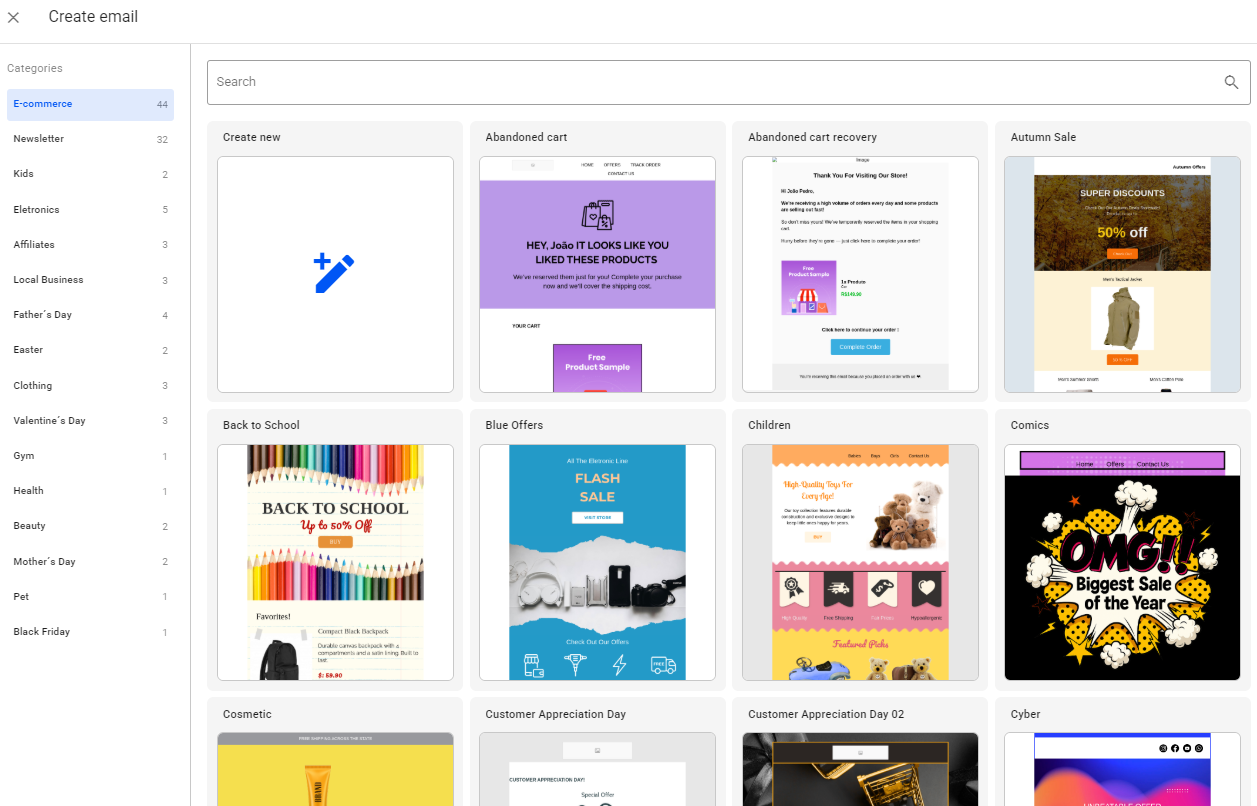
In this tab, you can view pre-approved email templates. They can be used as a base and freely edited to suit your needs. You can also create a new email by clicking the Create New** option. However, in this example, we’ll use one of our templates.
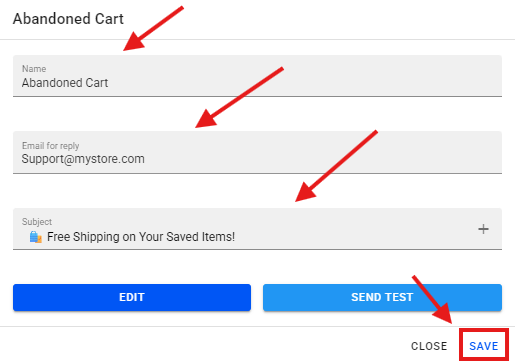
After selecting your email, enter a Name, an E-mail for Reply which will be used as the sender if your customers reply, and the desired Subject To finish, simply click Save
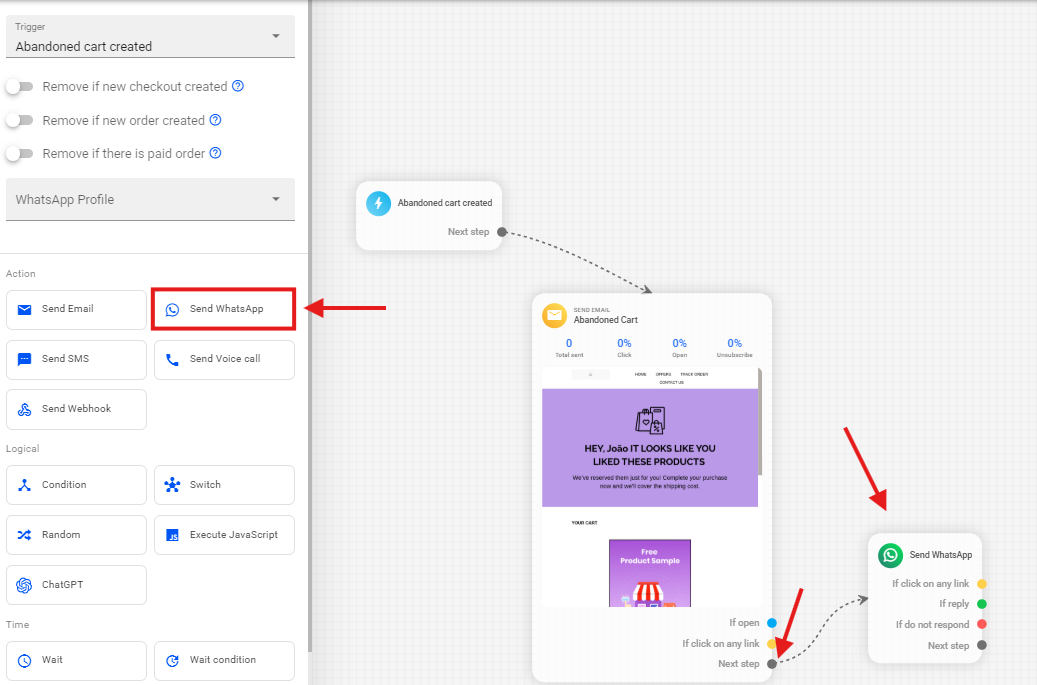
If you want to send WhatsApp messages in this automation, select the Send WhatsApp option and link it to the Next Step sub-trigger from your email block.
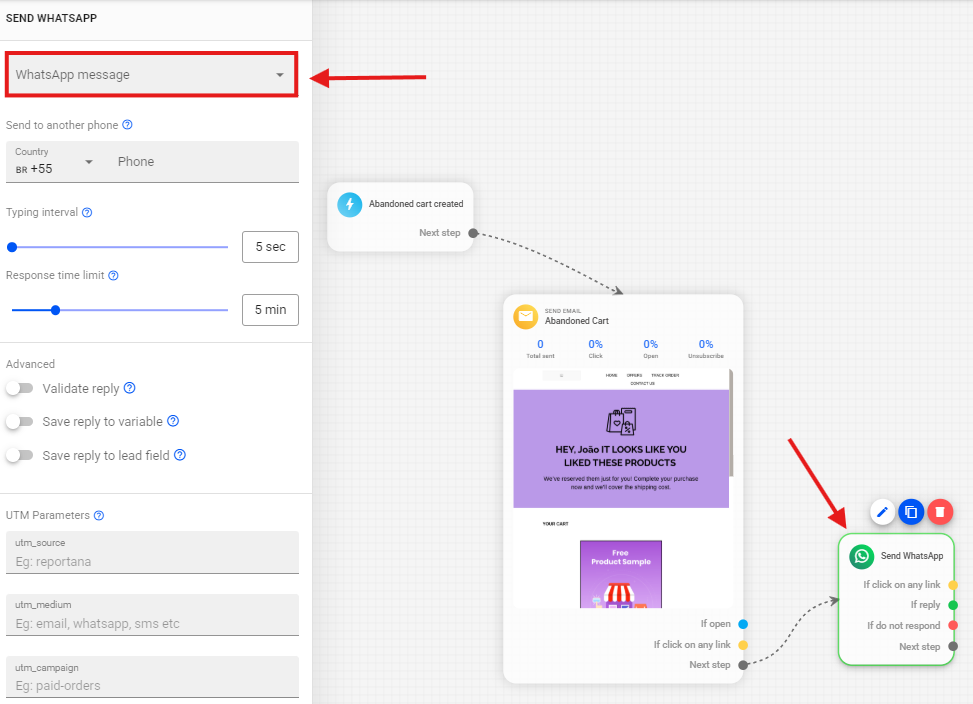
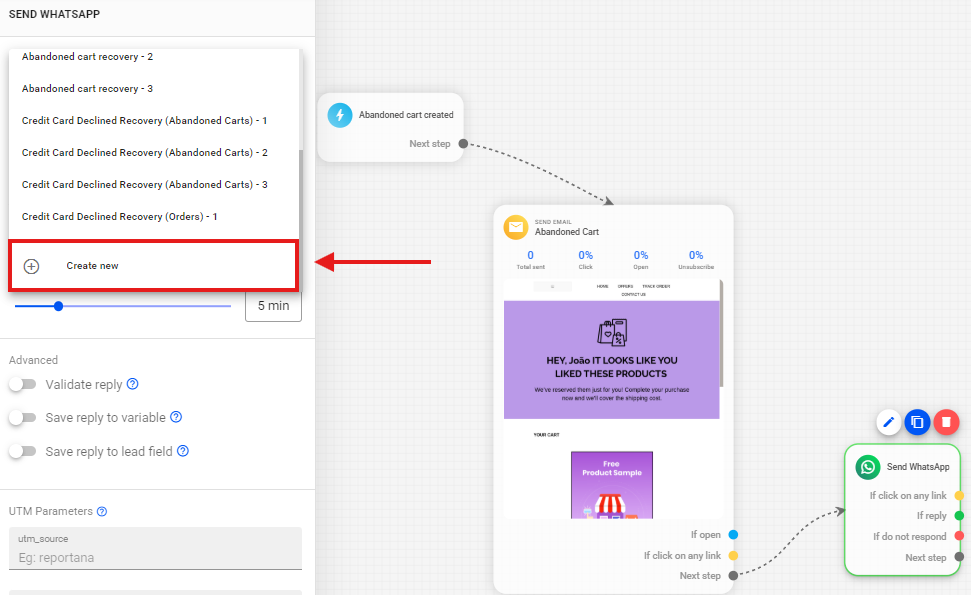
Next, select your WhatsApp block and click on WhatsApp Messages.
After selecting WhatsApp Messages, all previously created messages will be displayed, which you can reuse if you wish. However, in this example, we’ll create a new message. To do so, select the Create New option.
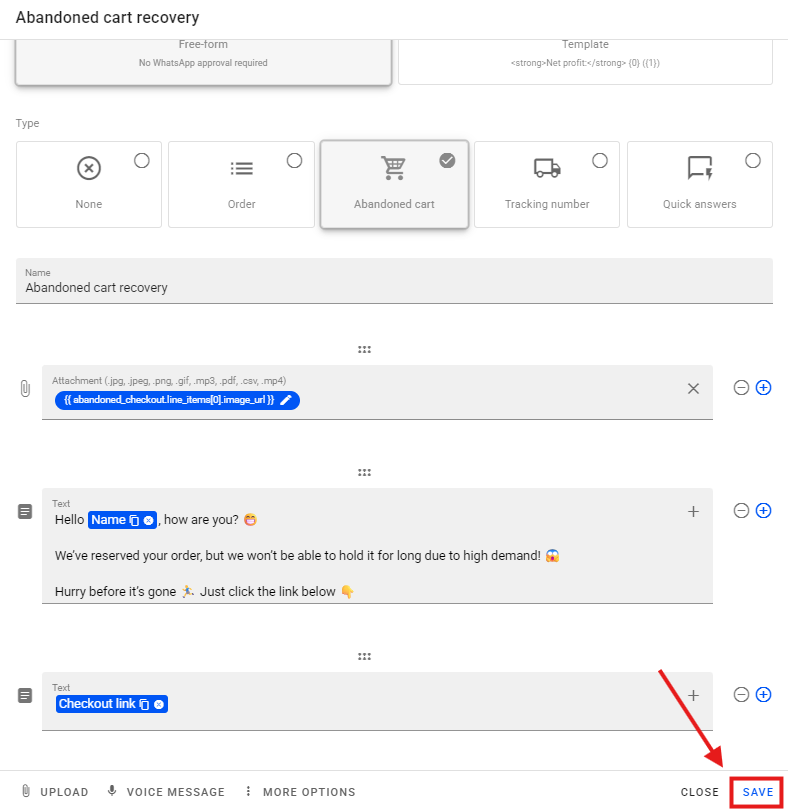
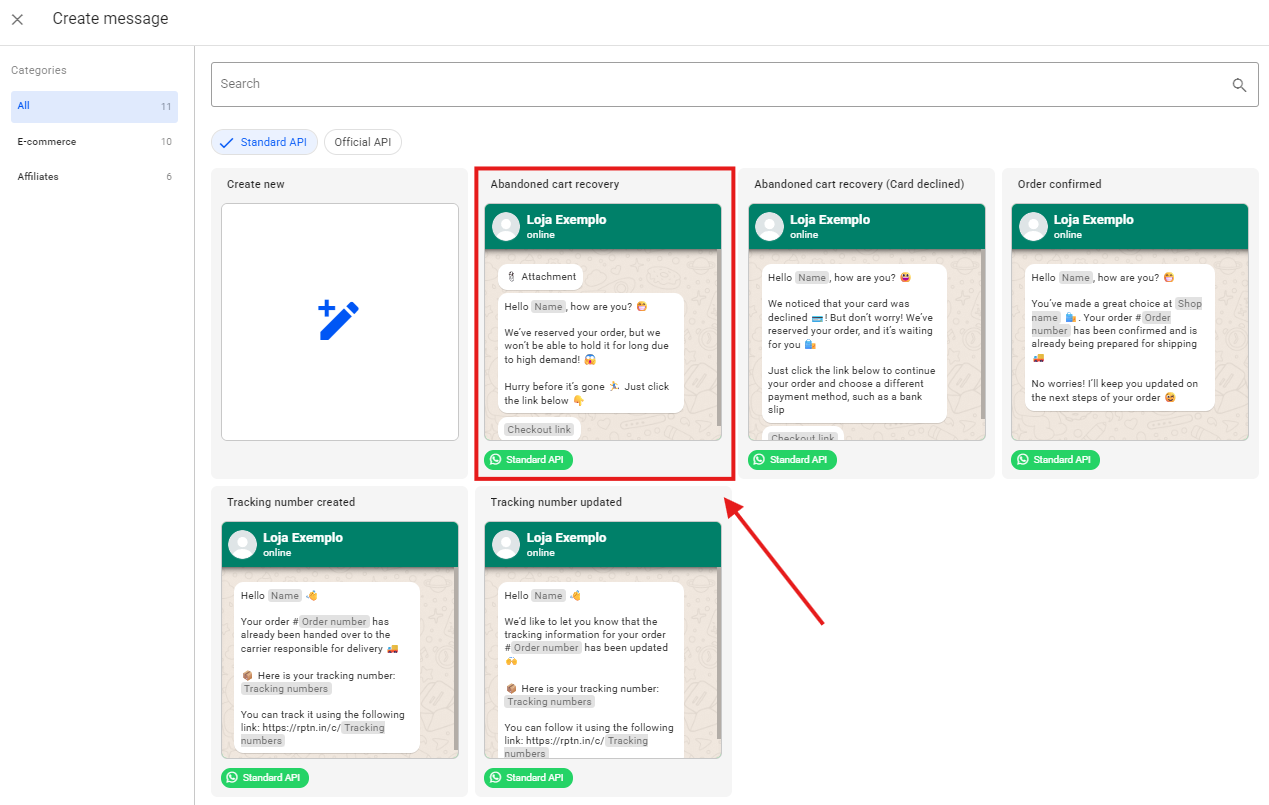
In this tab, you can view pre-approved message templates. They can be used as a base and freely edited to suit your needs. You can also create a new message by clicking the Create New option. However, in this example, we’ll use one of our templates.
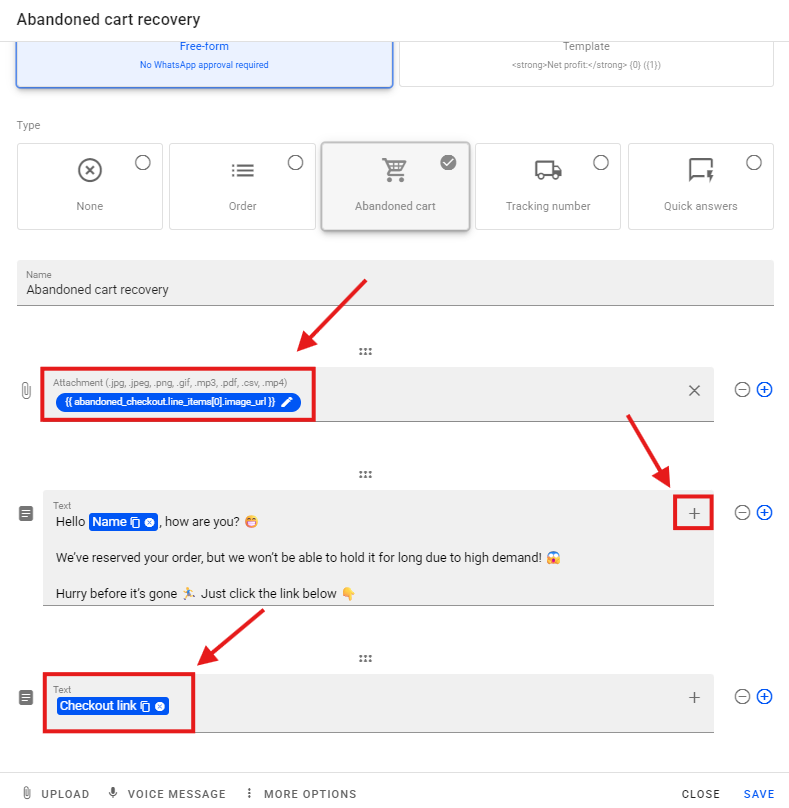
This pre-configured message includes some added variables, such as the image of the product added to the cart and the checkout link. It can be easily customized by clicking the “+” button, where you can insert new variables and adjust the text as needed.
Note: If you have any questions about how our WhatsApp message editor works, we recommend watching our tutorial: Getting to Know the WhatsApp Message Editor
After creating your message, click Save to save it.
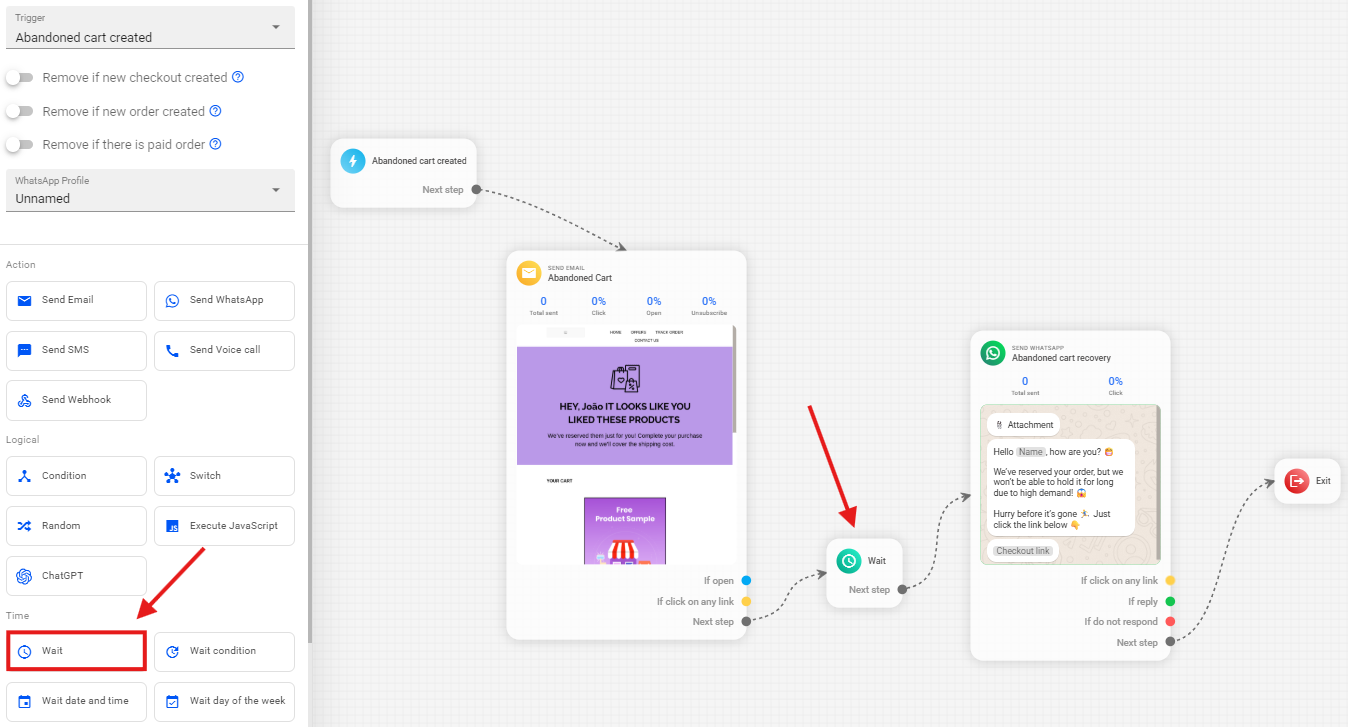
If you want, for example, to send this WhatsApp message one day after the cart is created or even send follow-up messages go to the side menu and select the Wait option to add wait blocks to your automation.
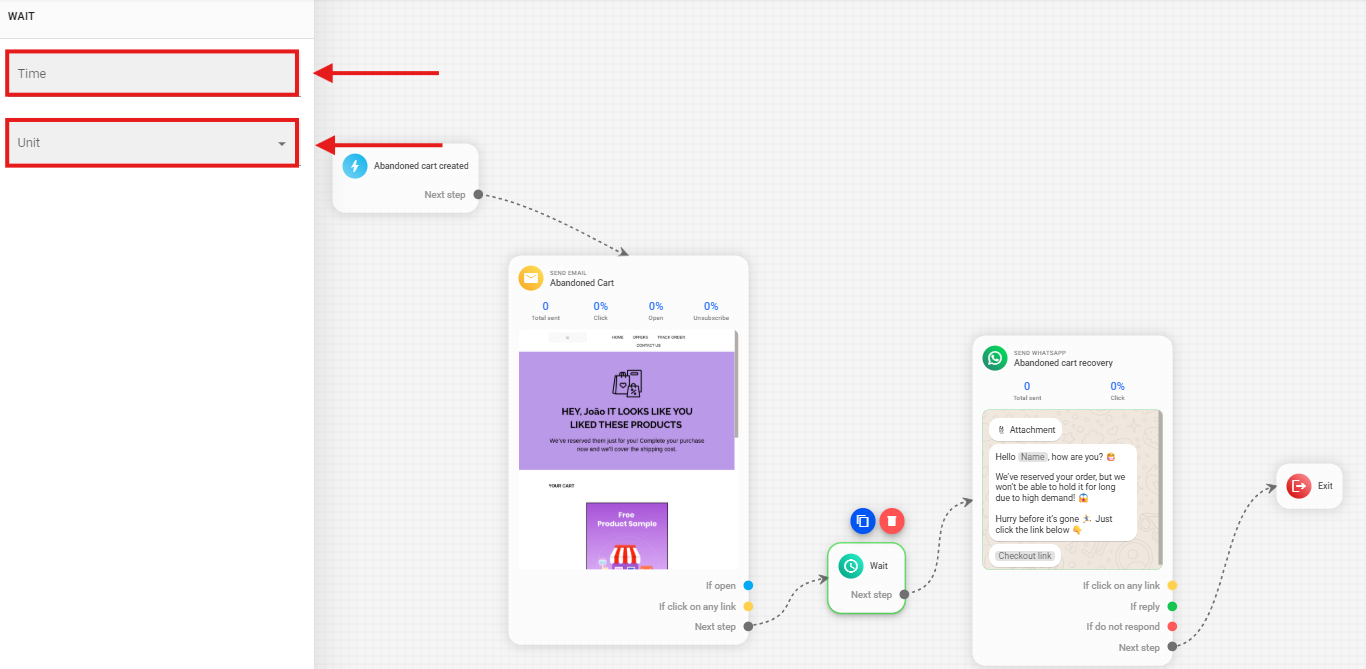
Select the Wait block and, under the Time option, enter the duration you want to wait before sending the message. Then, under Unit, choose the desired time unit days, hours, or minutes.
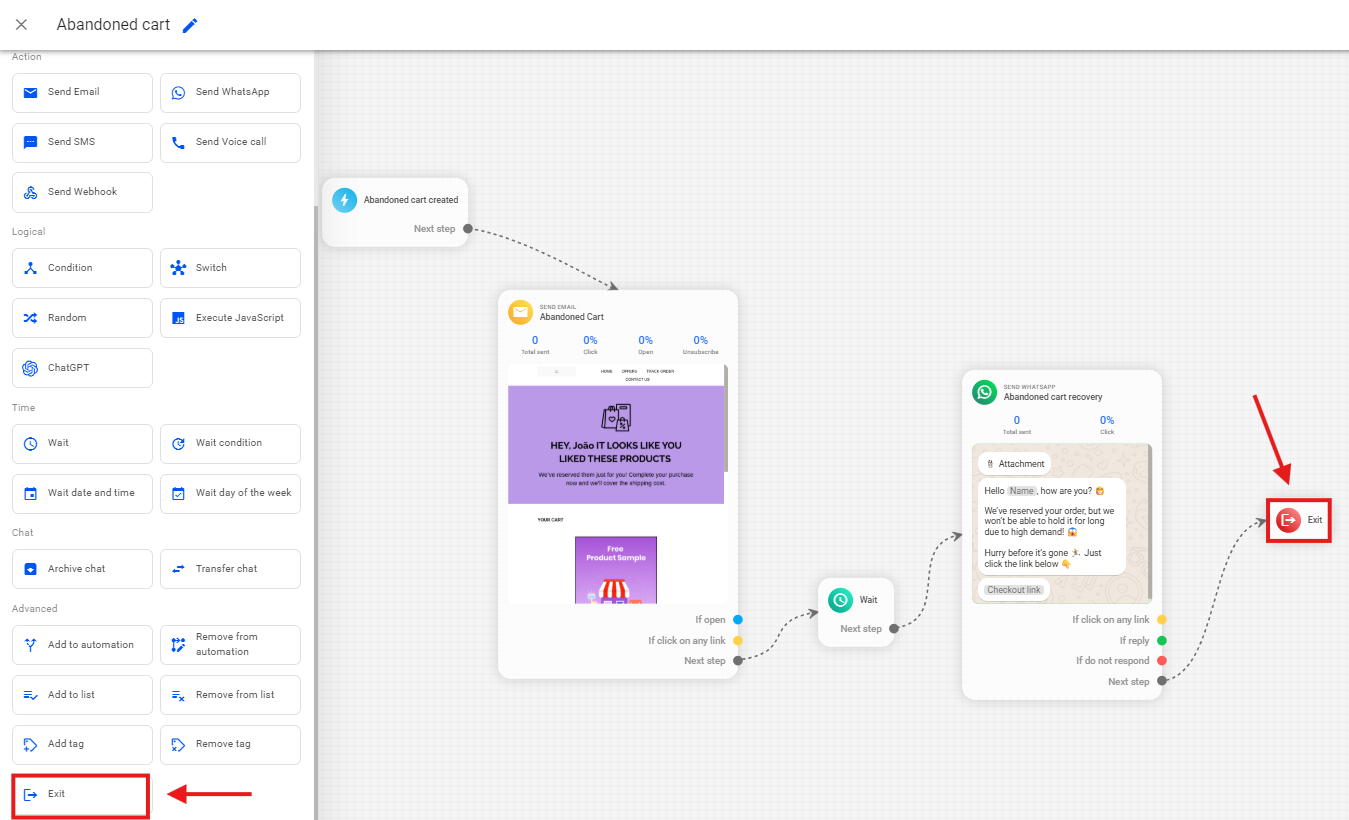
Add the Exit block indicating the end of the automation.
After creating your flow, select the Save option to save your automation.
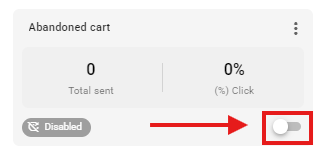
After saving your automation, it will be displayed as shown in the image below. To finish, simply click the highlighted button to activate your automation.